My agentic dev workflow right now
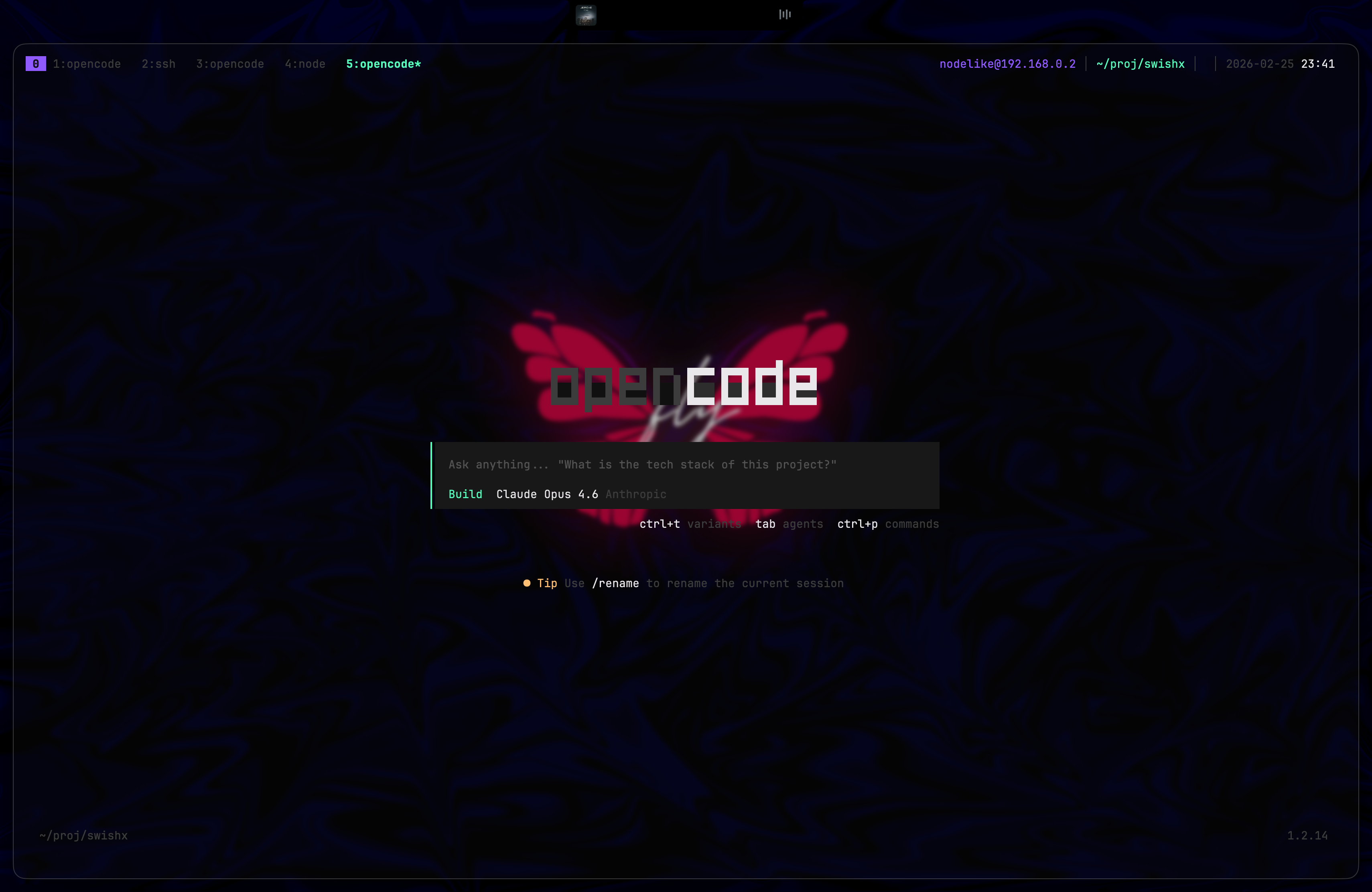
Tools that I use:
IDE - VS Code
Term - Ghostty + Tmux
Agents: Opencode, Codex Mac App
Models: Opus 4.6, GPT-5.3-Codex
Codex is good at long horizon exploring. I use it a lot to create docs for the agents & for tasks in backend or for highly critical parts.
Opus 4.6 is just fast and I use it a lot for quick implementations that is needed. Also its so good at designing, if instilled with good taste. I like its vocabulary also, it feels like it has a personality.
These models are very good if you guide it the best and help them. I have the whole bunch of bootstrap docs that is always read when new session is started. And I index the docs in the AGENTS.md file. And my AGENTS.md file sits at the core projects root folder, from where I mostly open the agent session.
And now I am just able move fast and work on different parts of the system without re-explaining my project every session.
The trick is context docs. I have an AGENTS.md at my project root that points to 5+ big markdown files: system architecture, user journeys, database inventory, gap analysis, and a session bootstrap checklist. Every new session reads these first. The agent immediately knows what services exist, what contracts are broken, what branches matter.
I update these docs as part of the work, not separately. When a contract changes, the doc changes in the same session.
My project is multi-repo Go microservices, React Native mobile app, NextJs dashboards, Terraform. The bootstrap checklist has the agent verify branches and state across all sub-repos before touching anything.
Codex does the deep audits, cross-referencing contracts across mobile, gateway, and backend, or planning migrations. It built the bootstrap docs in the first place.
Opus does the daily work, wiring screens, fixing handlers, updating configs. Fast, follows context, ships.
The whole point: agents are as good as the context you give them. Without project docs they hallucinate API paths and invent database columns. With a 500-line architecture doc they stay on the rails.
The docs took 2-3 hours to create. I explained the whole architecture we have for the system, why certain parts are the way they are, Project history, current state, future goals, how we are managing versions, clients, also gave access to pretty serious cli tools like, aws cli, rundeck for cicd, vercel cli, psql and db/redis creds with safe access, etc. Maintaining them is near-zero because the agents do it as part of the work. If you're using AI agents without context docs, you're paying for amnesia.